


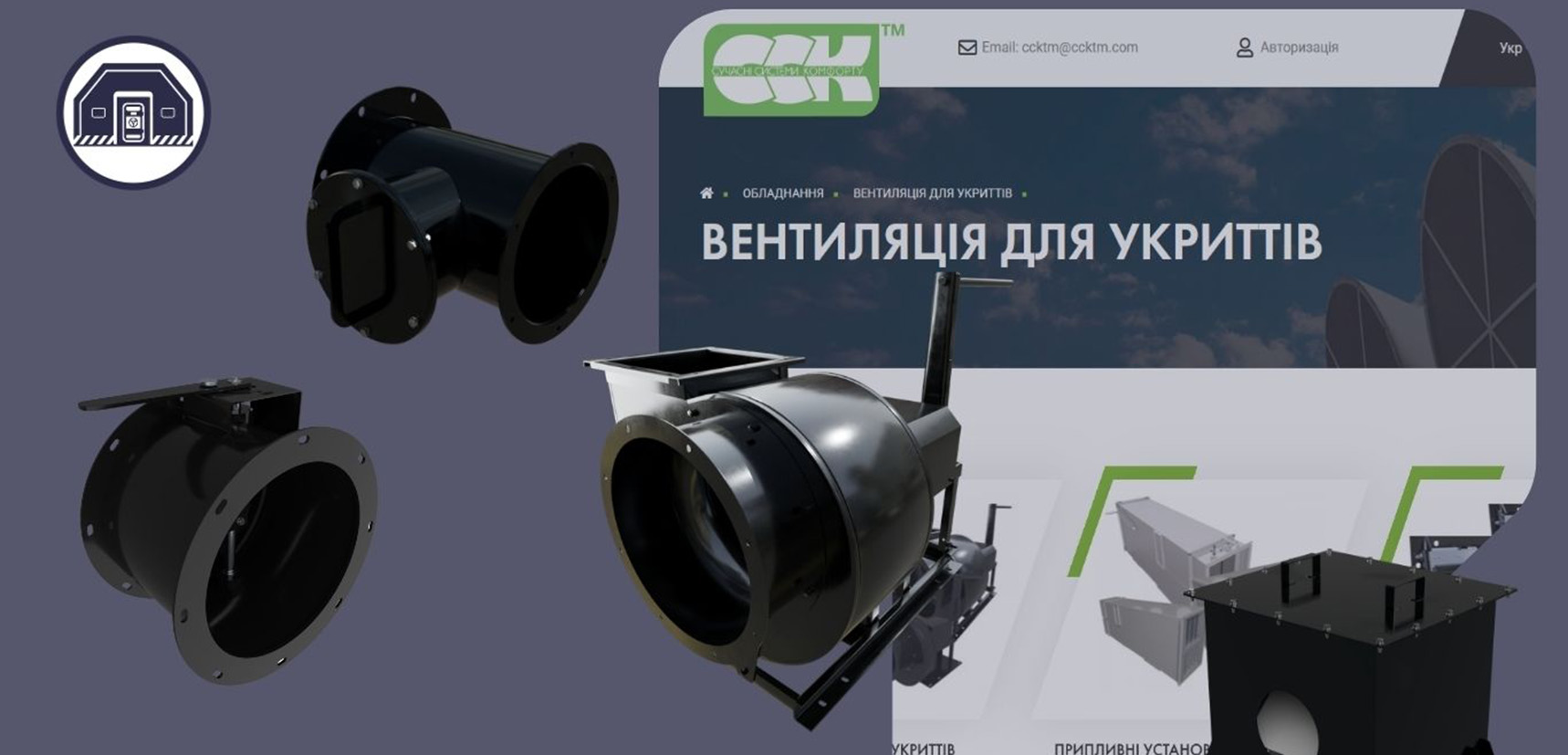
A properly designed shelter ventilation and air purification system is essential for ensuring the safety, health, and comfort of occupants under emergency conditions. In confined spaces and in situations where the ambient air may be contaminated, a bunker ventilation system must provide continuous air exchange and efficient filtration of all types of hazardous contaminants.
CCK TM LLC, a Ukrainian manufacturer of high-tech HVAC equipment, offers comprehensive solutions that comply with stringent civil protection requirements and modern engineering standards. The high reliability and advanced automation of these systems significantly reduce health risks and maximize the autonomous operating time of shelters and protective facilities.
You can explore the complete product range on the Shelter Ventilation Equipment page of CCK TM LLC.
Key Requirements for Shelter Ventilation Systems
A bomb shelter ventilation system is a critical life-support component. Its design and installation are governed by strict engineering requirements and regulatory standards. The primary requirements include:
- Providing the required air exchange rate according to the size of the shelter and the number of occupants.
- High-efficiency air filtration capable of removing chemical, biological, and aerosol contaminants.
- Maintaining stable pressure and system airtightness to prevent contaminated outdoor air from entering the shelter.
- Automated operating modes for switching between normal, emergency, and energy-saving ventilation modes.
- Long service life and ease of maintenance under conditions of limited access and resources.
Technical regulations and standards for the design of protective shelter ventilation systems are specified in specialized engineering and civil protection documents.
Air Purification Modes in Shelter Ventilation Systems
What air purification modes are available in a shelter, and why are they important? Modern shelter ventilation systems generally operate in three primary modes:
1. Normal (Air Exchange) Mode This mode provides a continuous supply of fresh air with the required degree of filtration while removing exhaust air to maintain indoor air quality and ensure the health and comfort of occupants.
2. Recirculation Mode This mode is used when access to fresh outdoor air is restricted or when the external environment is contaminated. Exhaust air is purified and recirculated back into the shelter. Recirculation mode improves energy efficiency and enables reliable operation under adverse environmental conditions.
3. Emergency Mode Emergency mode is activated during incidents involving hazardous substances released into the environment. In this mode, the ventilation system maximizes filtration efficiency and airtightness, providing the highest possible level of protection for shelter occupants.
These operating modes can be switched automatically using modern ventilation control systems that adapt to changing environmental conditions. The advanced shelter ventilation solutions developed by CCK TM LLC demonstrate extensive capabilities for intelligent operating mode management.
Air Filtration Systems for Bunkers: Filter Types and Their Features
What filters are included in an effective bunker air purification system, and how do they differ? The primary filter types include:
Filter Type | Function | Features and Applications |
Mechanical | Captures large and fine dust particles, pollen, and particulate matter | First-stage filtration; requires regular replacement or cleaning |
Chemical | Removes toxic gaseous substances and odors | Used for protection against poisonous agents and toxic compounds |
Aerosol (bacterial) | Captures microorganisms, viruses, and biological particles | Critical for protection against biological hazards |
Air Cleaning System and Ventilation in a Shelter: Effective Solutions from CCK TM LLC
A properly designed ventilation and air purification system in shelters is a key factor for safety, health, and comfort in extreme conditions. In confined spaces with a high risk of atmospheric air contamination, a bunker ventilation system must ensure continuous air exchange and effective filtration of all types of harmful substances.
CCK TM LLC is a Ukrainian manufacturer of high-tech climate control equipment offering integrated solutions that comply with strict civil defense requirements and modern regulatory standards. High reliability and advanced automation capabilities significantly reduce health risks and extend the autonomous operation time of shelters.
You can explore the full product range on the page “Ventilation Equipment for Bomb Shelters” by CCK TM LLC.
Key Requirements for Shelter Ventilation Systems
A ventilation system in a bomb shelter is a critical life-support element. Its design and installation are regulated by strict technical and regulatory standards.
The main requirements include:
- ensuring the required air exchange rate according to the shelter size and number of occupants;
- high-efficiency air filtration capable of capturing chemical, biological, and aerosol contaminants;
- maintaining stable positive pressure and system airtightness to prevent infiltration of contaminated external air;
- automation of operating modes, enabling switching between normal, emergency, and economy modes;
- durability and ease of maintenance under limited access and resource conditions.
Technical regulations and standards for designing ventilation systems in protective structures are defined in civil defense regulatory documentation.
Air Purification Modes in Shelter Ventilation Systems
What air treatment modes are used in shelters and why are they important?
1. Normal (ventilation) mode This mode provides supply of fresh air with required filtration and removal of exhaust air to maintain indoor air quality and healthy living conditions.
2. Recirculation mode Used when access to fresh air is limited. Exhaust air is filtered and returned back into the shelter. This mode helps reduce energy consumption and ensures operation in contaminated outdoor environments.
3. Emergency mode Activated in emergency situations or when hazardous substances are present in the environment. In this mode, the system operates with maximum filtration efficiency and airtightness, ensuring the highest level of protection.
Switching between modes can be fully automated using modern ventilation control systems that adapt to changing operating conditions. CCK TM LLC shelter ventilation systems provide advanced automated mode control capabilities.
Shelter Air Filtration System: Types of Filters and Their Features
What filters are used in an effective bunker air purification system?
Modern filtration systems typically include:
- coarse filters for dust and large particulate removal;
- fine filters for small particulate and aerosol capture;
- HEPA filters for microorganisms, bacteria, and ultra-fine particles;
- adsorption (chemical) filters for toxic gases and hazardous chemical compounds.
All filters work in a multi-stage system, ensuring comprehensive air purification inside the shelter.
Shelter Ventilation Equipment from CCK TM LLC
CCK TM LLC manufactures a wide range of ventilation equipment designed specifically for civil defense shelters.
The product line includes:
- high-efficiency air filtration units and filter systems;
- sealed fans with backup capacity;
- automated ventilation control systems that monitor air quality and operating modes;
- climate equipment combining filtration, cooling, and dehumidification functions.
CCK TM LLC solutions are characterized by high reliability due to automation, modular design, and simplified maintenance.
Design and Installation Features of Shelter Ventilation Systems
Designing a bomb shelter ventilation system requires a comprehensive analysis of operating conditions and a structured engineering approach.
Key stages:
- Determining room volume and occupant count for air exchange calculations.
- Assessing potential contamination sources and selecting appropriate filter types.
- Designing ductwork layouts with airtightness and safety considerations.
- Selecting and integrating automation systems.
- Installation and commissioning with full system testing across all operating modes.
- Establishing regular maintenance and monitoring procedures.
Using structured checklists significantly improves implementation quality and system safety.
Autonomous Operation and Emergency Support of Ventilation Systems
To ensure continuous ventilation during power outages or emergency conditions, the following measures are required:
- use of backup power sources (batteries and diesel generators);
- automatic switching to low-energy modes during voltage drops;
- modular design allowing isolation of damaged system sections;
- redundant filtration elements with quick replacement capability;
- real-time system monitoring via remote control centers.
CCK TM LLC places strong emphasis on autonomy and reliability in its solutions, confirmed through practical implementation experience.
Successful CCK TM LLC Projects for Protective Structures
Over the years, CCK TM LLC has implemented dozens of projects equipping shelters and bunkers with integrated ventilation and air purification systems.
Examples include:
- installation of automated ventilation systems in large government shelters integrated into civil defense infrastructure;
- ventilation solutions for private bunkers with recirculation modes and customizable settings;
- specialized systems for industrial protective facilities with enhanced air purification requirements.
FAQ
How often should filters in a shelter ventilation system be replaced?
Replacement intervals depend on filter type and operating conditions.
Typically every 6–12 months, or more frequently in highly polluted
environments.
Can the ventilation system be upgraded with new operating modes?
Yes. Modern automated CCK TM LLC systems support integration of new modes and remote control.
What should be done during a power outage?
Backup power sources and low-energy equipment should be used. Automatic systems switch ventilation to emergency operation mode.
How does the ventilation system affect indoor climate in a shelter?
It ensures uniform fresh air distribution, humidity control, and
temperature stabilization, providing safe and comfortable conditions.
Which filters are most effective against chemical substances?
Special adsorption and chemical filters designed to capture toxic gaseous compounds are used.